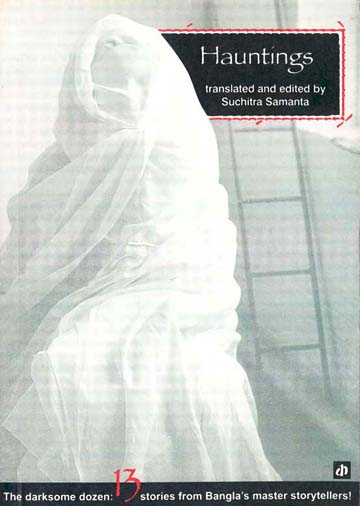
Hauntings: Bangla Ghost Stories
₹200
You are previewing: Hauntings: Bangla Ghost Stories
Related Books
-
Daddoo’s Day Out₹255 -
Patte₹95 -
Dobakatti₹135 -
Moaning Morris₹135 -
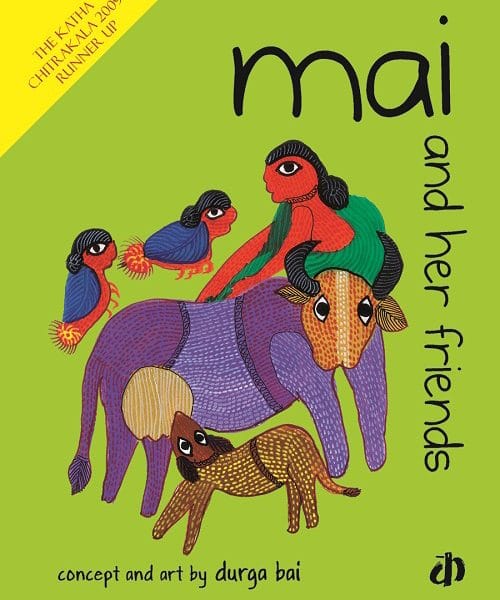
Mai and Her Friends₹175
Thirteen supernatural stories that speak powerfully of complex human emotions, Intuitions, loneline and social marginality.
“Elusive and jelly-like, the 13 ghost stories in this volume conjoin two different worlds: ethereal and the real.” — books.google.co.in
Authors: Rabindranath Tagore, Pramatha Chaudhari, Panchkari De, Bibhutibhushan Bandopadhyay, Tarashankar Bandopadhyay, Banaphul, Swapanburo, Lila Majumdar, Kamakshiprasad Chattopadhyay, Shishir Lahiri, Mahasweta Devi
Reviews
Banaphul
Banaphul was the pen name of Balaichand Mukhopadhyay (1899–1979), a distinguished Bengali writer, physician, and educationist. Renowned for his concise style and emotional depth, he wrote novels, short stories, essays, and poetry that explored human psychology, social values, and compassion. His notable works include Agniswar, Hate Khari, and numerous short stories. Banaphul received major honours, including the Sahitya Akademi Award, and remains a significant figure in modern Bengali literature. He passed away in 1979.

Bibhutibhushan Bandopadhyay
Bibhutibhushan Bandopadhyay (1894–1950) was a renowned Bengali novelist and short story writer, celebrated for his vivid portrayal of rural Bengal and deep humanism. His writing captures nature, poverty, childhood, and the emotional lives of ordinary people with lyrical realism. His most famous works include Pather Panchali, Aparajito, and Aranyak. Pather Panchali gained international recognition through Satyajit Ray’s film adaptation, securing Bandopadhyay’s lasting place in Indian literature. He passed away in 1950.
Kamakshi Prasad Chattopadhyay
Kamakshi Prasad Chattopadhyay was a well-known poet and fiction writer, both for children and adults. He was awarded the Bankim Gold Medal for his Bachelor's examinations. A representative for India at the Pen International at Venice in 1948, he lived in Moscow for several years to translate and edit the works of Gorky, Turgenev and Tolstoy.

Leela Majumdar
Leela Majumdar (1908–2007) was a cherished figure in Bengali literature, known for her unique ability to blend humour, fantasy, and childhood realities. Although a distinguished scholar and English professor, her true passion was children’s literature. She moved away from the moralizing tone common in early twentieth-century books, opting for a witty style that treated children as equals. Her stories often included quirky uncles, clever grandmothers, and misunderstood ghosts. Her masterpiece, Padi Pishir Bormi Baksho, is a cornerstone of Bengali fiction, while her autobiographical works, Aar Konokhane and Pakhi Sab Kare Rab, offer a nostalgic view of Bengal’s social changes. She was also the editor of the beloved children's magazine Sandesh.

Mahasweta Devi
Mahasweta Devi (1926–2016) was a significant Bangla fiction writer, best known for her short story “Draupadi”. A committed socio-political activist, she worked at the grassroots level with landless labourers and women. In her powerful works, including Bitter Soil, Mother of 1084, After Kurukshetra, Jhansi Rani and Imaginary Maps among others, one sees her uncompromising critique of oppressive social and historical conditions, especially of women, as well as her fierce advocacy for marginalized communities. She passed away in 2016.


Pramatha Chaudhuri
Pramatha Chaudhuri, alias Birbal, was a prominent Bengali writer. Incredibly fond of Sanskrit, his faith in the Bengali language affords him credit as one of the key figures in exploring the inherent potential of Bengali as a language for creative composition.

Rabindranath Tagore
Rabindranath Tagore (1861–1941) was an Indian poet, novelist, playwright, composer, painter, and thinker who reshaped modern Indian culture. Writing mainly in Bengali, he produced poetry, fiction, essays, songs, and plays marked by lyrical humanism and spiritual depth. His work Gitanjali won the 1913 Nobel Prize in Literature. Tagore composed the national anthems of India and Bangladesh, founded Visva-Bharati University, and championed education, internationalism, freedom of thought, and bridging East and West. His ideas influenced global literature, art, politics, education and ethics. He passed away in 1941.
Shishir Lahiri
A Master's in Bangla literature, Shishir Lahiri wrote for many eminent literary magazines like the Desh and published many novels and short stories.
Swapan Buro
Writing under the name Swapan Buro, Akhil Niyogi was educated in the Government Art College, Calcutta, and started his career as a commercial artist. He then became a story writer, first for young readers in Sishusathi magazine, subsequently in Jugantar. He has about sixty published titles including sixteen plays. He was awarded several prizes for literature including the Vidyasagar Prize by the state government.

Tarashankar Bandopadhyay
In most of his 130 titles of fiction, Bandopadhyay dealt with the social transition of his time with immense sympathy for the poor and the deprived. He was awarded the Sahitya Akademi Award in 1955 for the novel Arogya Niketan and the Rabindra Memorial Prize in 1956 for Gana Debata. In 1966, he received the Jnanpith. He was also felicitated with the Padma Shri and the Padma Bhushan by the Government of India for his service to literature.